


Estate Sale Charitable Donations in Michigan: How It Works
Estate sale charitable donations in Michigan can help families reduce their tax burden while giving belongings a meaningful second life. If you’re clearing a home and wondering what to do with unsold items, Clearview coordinates the entire donation process for you.
Charitable Giving and Tax Deductions (Simple Explanation)
Charitable giving helps organizations in your community, and for taxpayers, certain donations may be deductible. In general, deducting donations made to qualified charities may reduce taxable income, depending on your filing situation.
A charitable donation (also called a charitable contribution) is a cash or non-cash gift made to a qualified 501(c)(3) tax-exempt organization. The key is that the donor does not receive anything of value in return for the donation.
Non-cash donations such as clothing, household goods, and furniture that are in good condition (or better) may qualify for a deduction under federal guidelines. The IRS also requires donations to be properly documented and valued.
Estate sale charitable donations in Michigan simplify the cleanout process while providing proper tax documentation. Clearview coordinates estate sale charitable donations in Michigan for families across Oakland and Macomb County.
Why Donation Can Be the Best Alternative to an Estate Sale
Estate sales are a great option for downsizing and liquidation, but they’re not always possible. Sometimes the timeline is tight. Sometimes the home cannot be opened to the public. Sometimes the contents are better suited for donation, recycling, or disposal.
A donation and cleanout approach can be a fast, responsible solution. Clearview helps you sort what should be kept, what can be donated, and what needs to be disposed of, so the property can move to its next step without unnecessary stress.

Standard Deduction vs. Itemizing (What Actually Matters)
Most taxpayers take the standard deduction — a fixed amount that reduces taxable income and eliminates the need to track itemized deductions.
Itemizing works differently. When you itemize, you list eligible deductions, including charitable contributions, and the total reduces your adjusted gross income. Itemizing typically makes sense only when your itemized total exceeds your standard deduction for the year. If you want to claim charitable donations, you generally need to itemize. A tax professional can help you determine which option is right for your situation.

IRS Guidelines: What Typically Does NOT Count
The IRS does not allow every expense to be deducted as a charitable donation. For example, payments for raffle tickets, tuition, donations made directly to individuals, political contributions, and many social club or membership dues typically do not qualify.
Also, donations generally must go to a qualified organization. Common examples of qualified organizations include churches and religious organizations, 501(c)(3) nonprofits, nonprofit schools and hospitals, volunteer fire departments, certain veterans groups, and public parks or recreation facilities.
If you’re unsure, your tax professional can confirm whether an organization qualifies.
Documenting Your Donations
Documentation matters. Donation records may include receipts, acknowledgment letters, bank statements, photographs, or other proof of what was donated. The IRS record-keeping requirements vary depending on the type and value of the donation, so keeping your paperwork organized is important.
Clearview can help coordinate donation placement and make sure you receive the documentation you need for your records.
Special Requirements for Higher-Value Non-Cash Donations
For larger non-cash donations, the documentation requirements increase. If a non-cash donation total is over certain thresholds, you may need additional forms or a qualified appraisal depending on the circumstances.
For example, donations over $500 often require more detailed reporting, and donations in higher value ranges may require additional acknowledgment or a qualified appraisal. If an item’s value is significantly overstated, penalties can apply, so accuracy matters.
If you anticipate higher-value donations, we recommend working with a tax professional or qualified appraiser to make sure everything is handled correctly.
Clearview provides transparent consultations so you understand the scope of work and expectations before moving forward. Our goal is clarity, not guesswork.

What Items Are Commonly Donatable?
Donation acceptance varies by charity, but many organizations commonly accept gently used household goods, furniture, clothing, accessories, books, and certain electronics or appliances. Some charities may accept antiques, collectibles, and even larger items depending on their needs and capacity.
Clearview helps you sort items realistically and coordinate where they can go, so usable items have the best chance of being accepted and the remaining items are handled responsibly.
Maximizing Your Deduction (Planning Tips)
Donation timing can matter. Donations are typically deductible in the tax year they’re made. Some people choose to donate more in a year when income is higher, or “bundle” multiple years of giving into one year if it makes itemizing more beneficial.
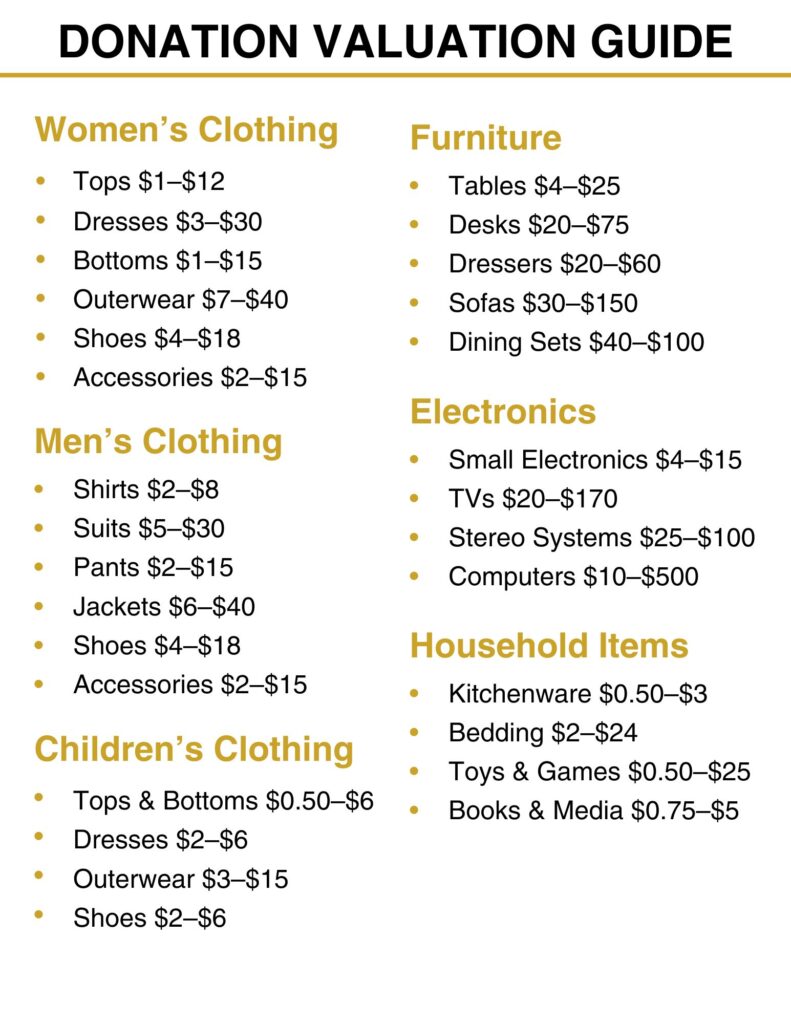
Another important piece is fair market value. If you believe certain donated items have unusually high value, a professional appraisal may be worth considering so your documentation is strong and accurate.


Step-by-Step: A Simple Way to Stay Organized
If you’re preparing for a donation-focused cleanout, start by separating items into clear groups: keep, donate, sell, recycle, and trash. From there, confirm which charities you want to support and what they accept. Then make sure you receive proper documentation and keep a basic record of what you donated (photos and notes help).
If this feels like a lot, that’s exactly why Clearview exists. We help manage the sorting, the logistics, and the coordination so you’re not doing it alone.
Tips for Success (When You’re Doing This Under Pressure)
When you’re emptying a home, systems beat emotion. Keep categories simple, take photos as you go, and physically separate donation piles from keep piles to avoid confusion. If family members are involved, assign roles so the work doesn’t stall.
Most importantly, stay in touch with your tax professional if you plan to claim a deduction. They can guide you on documentation and what makes sense for your return.
Related Services: Learn about our estate cleanout and donation coordination services, explore whole house cleanout services, read more on our estate sale resources page, or start your cleanout. Contact Clearview to discuss your options.